Cover: Onceinawhile · Source · CC BY-SA 4.0
SURVIVING COLOR / A DIFFERENT WAY TO SEE
Look a little
closer.
Time fades the color.
A photograph can still hold its traces.
Explore painted scrolls, dyed textiles, worn murals and once-painted marble through color separation. Start with a remarkable photograph, or bring your own.
Inspired by the original NASA Spinoff articleA CLOSER LOOKDrag to compare
 OriginalColor study
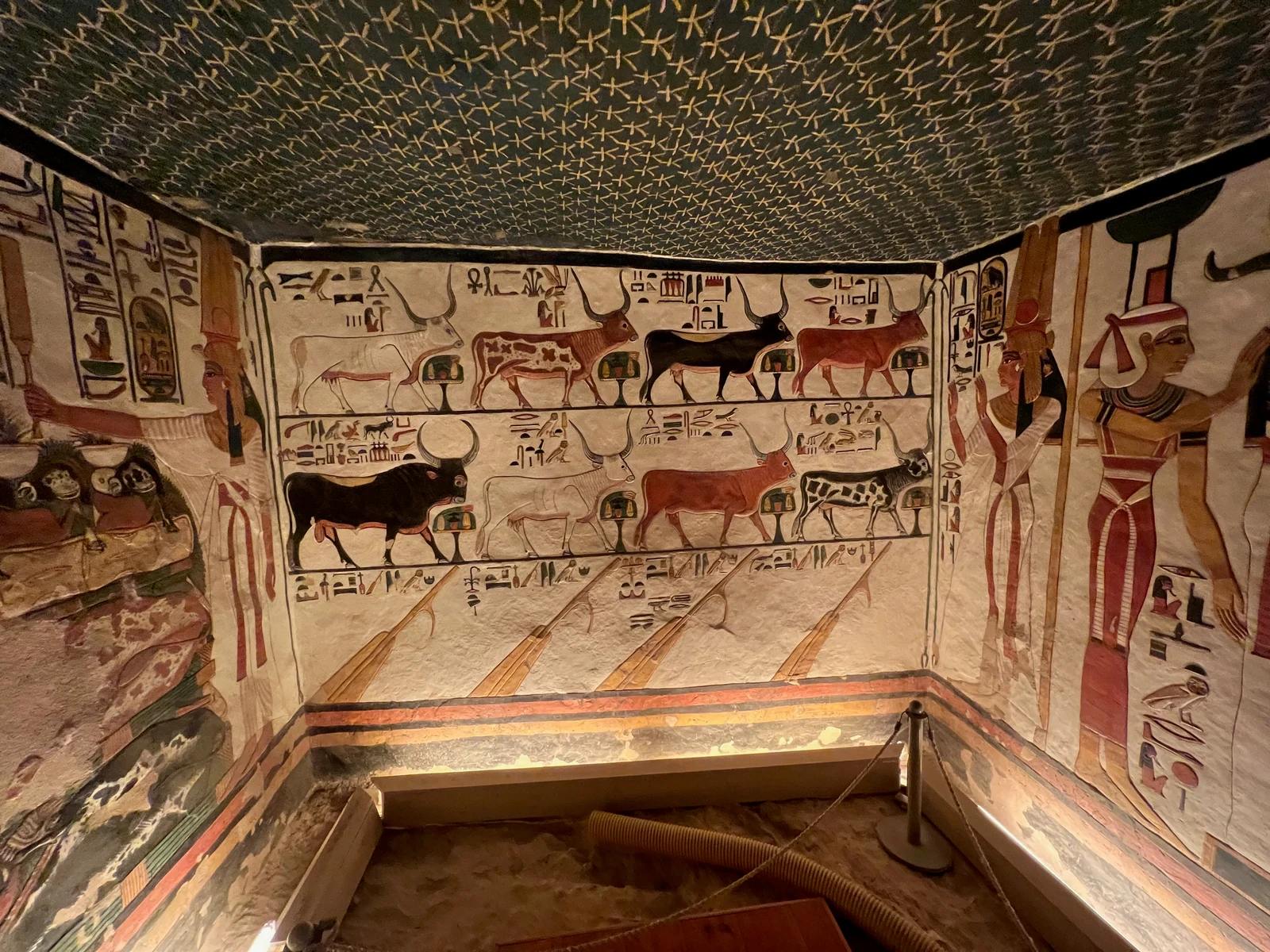
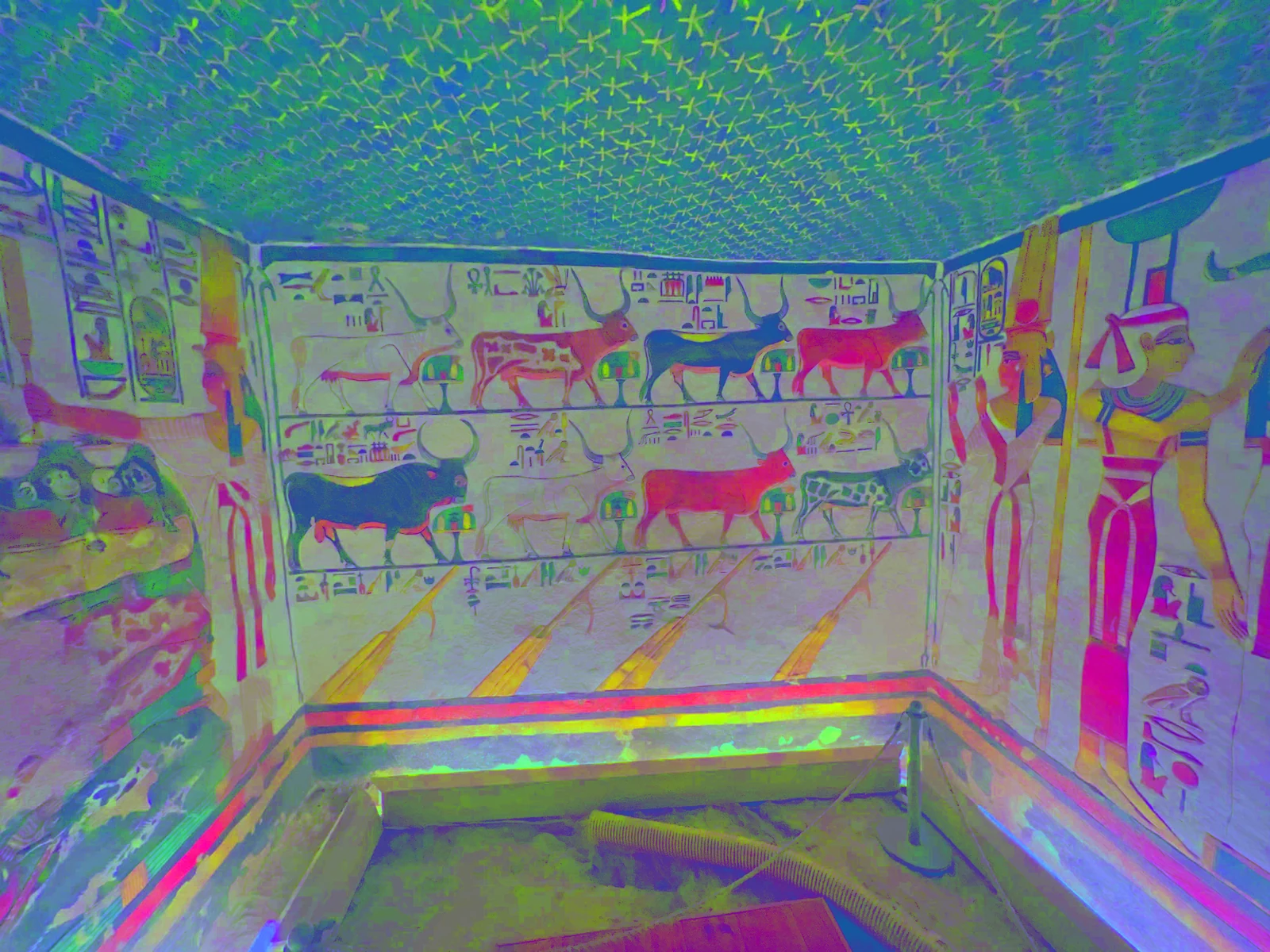
Tomb of Nefertari · Egypt
Beneath a sky of painted stars.
Surviving figures, borders and a star-covered ceiling fill the tomb. Compare the worn passages with the strong colors; the photograph also reflects the surface’s conservation history.
Photo: Onceinawhile · Source · CC BY-SA 4.0. Color study: modified with RGB decorrelation stretch.
THE SAME PHOTOGRAPH. A DIFFERENT VIEW.
These are real photographs and mathematical color enhancements. The new colors make differences easier to see; they don’t tell us what the original palette looked like.
675 PHOTOGRAPHS / OPEN TO EXPLORE
Follow the color.
Choose a collection.
Egyptian tombs, Pompeian rooms, European manuscripts, Caribbean cave paintings and Pacific barkcloth. Explore by place or material, with each photograph’s dates and cultural context close at hand.
Cover: The Metropolitan Museum of Art · Source · CC0 / Public domain
Cover: The Metropolitan Museum of Art · Source · CC0 / Public domain
Cover: Joe Mabel · Source · CC BY-SA 4.0
Cover: José Latova Fernández-Luna / ASF Imagen, via GipuzkoaKultura · Source · CC BY-SA 2.0
Cover: Trinity College Dublin Library, Digital Collections Department · Source · CC BY 4.0
Cover: Osama Shukir Muhammed Amin FRCP(Glasg) · Source · CC BY-SA 4.0
Cover: The Metropolitan Museum of Art · Source · CC0 / Public domain
Cover: Cleveland Museum of Art · Source · CC0 / Public domain
Cover: Cleveland Museum of Art · Source · CC0 / Public domain
Cover: Carole Raddato from FRANKFURT, Germany · Source · CC BY-SA 2.0
Cover: Cleveland Museum of Art · Source · CC0 / Public domain
Cover: EgorovaSvetlana · Source · CC BY-SA 4.0
Cover: Cleveland Museum of Art · Source · CC0 / Public domain
Cover: Walters Art Museum · Source · Public domain
Cover: Arian Zwegers from Brussels, Belgium · Source · CC BY 2.0
Cover: Cleveland Museum of Art · Source · CC0 / Public domain
Cover: Walters Art Museum · Source · Public domain
NEW IN THE OPEN COLLECTION
Before color faded,
it was woven in.
Painted Andean cotton, Egyptian resist-dyed linen and patterned silk from Iran or Central Asia. Browse 675 credited photographs, including 177 textiles.
SELECTED PHOTOGRAPHS
Paint that still has
something to say.
From a palace in Iran to the interiors of Pompeii. Every image includes its original source, photographer’s credit and reuse license.
01 Tomb of Nefertari · Egypt
A painted world inside a tomb.
Figures, hieroglyphs and a ceiling of stars. Start with a worn section and compare it with the surrounding paint.
Onceinawhile · Source · CC BY-SA 4.0
02 Boscoreale · Italy
A Roman room, in fragments.
A seated figure from the Villa of P. Fannius Synistor. Follow the surviving contours through the faded plaster.
The Metropolitan Museum of Art · Source · CC0 / Public domain
03 Altxerri B · Basque Country, Spain
An Ice Age bison, in red.
A large painted animal spans the original cave wall. Follow the faint red contours beside mineral deposits and cracks.
José Latova Fernández-Luna / ASF Imagen, via GipuzkoaKultura · Source · CC BY-SA 2.0
06 Bernifal · Dordogne, France
A painted sign in the cave.
Small red marks form a tectiform sign on the original surface. Compare pigment with mineral color and the uneven cave lighting.
Thilo Parg · Source · CC BY-SA 4.0
07 Carolingian gradual · c. 830–860
Gold ink on purple parchment.
A worn manuscript bifolium retains metallic writing on dyed parchment. Inspect faint letters alongside folds and changes in the support.
Cleveland Museum of Art · Source · CC0 / Public domain
09 Sant Climent de Taüll · Catalonia · c. 1123
Faces on a surviving fragment.
Romanesque wall painting transferred to canvas. Compare the remaining figures with worn paint, joins and losses.
Joe Mabel · Source · CC BY-SA 4.0
10 Fontein Cave · Aruba
Lines left on a cave wall.
Indigenous painted motifs across a limestone surface. The cave’s later marks and varied lighting remain part of the photograph.
EgorovaSvetlana · Source · CC BY-SA 4.0
12 Paris? · c. 1400
The painted folds of stone.
A limestone sculpture with surviving polychromy and gilding. Look closely at the faded robes and exposed stone.
Cleveland Museum of Art · Source · CC0 / Public domain
13 England · c. 1325–1350
Faint figures on parchment.
A leaf from a psalter preserves the Annunciation in delicate color. Compare the painted figures with the aging support.
Cleveland Museum of Art · Source · CC0 / Public domain
14 Italy, possibly Florence · 1450–1500
Woven color, worn with time.
Two-color velvet and gold form a curved lattice. Compare surviving red and green with changes in the pile and lighting.
Cleveland Museum of Art · Source · CC0 / Public domain
15 Akrotiri · Bronze Age Aegean
Spring on an ancient wall.
Painted lilies and birds survive in assembled fresco fragments. Keep the joins and conservation history in view.
Zde · Source · CC BY-SA 4.0
16 Cueva de las Maravillas · Dominican Republic
A closer view of Taíno painting.
Dark painted figures on a cave surface, photographed under warm light. Compare contours while retaining the original beside the color study.
Danu Widjajanto · Source · CC BY-SA 4.0
17 Mieza · Macedonia, Greece
A ceiling in bloom.
Ancient flowers and tendrils across a tomb vault. Compare a faded petal with the surviving painted ground.
Carole Raddato from FRANKFURT, Germany · Source · CC BY-SA 2.0
18 Gunda Gunde · Ethiopia
A page full of color.
Painted ornament and colored writing on parchment from a sixteenth-century Gospel book.
Walters Art Museum · Source · Public domain
19 Western Tibet or Kashmir · 12th century
A small fragment, still vivid.
A painted Maitreya on a manuscript fragment. Look closely at the red ground, worn edges and surviving figure.
Cleveland Museum of Art · Source · CC0 / Public domain
20 Paracas · Peru · 400–200 BCE
A face painted into cloth.
A painted cotton textile from a funerary bundle. Follow the faint features across the weave and folds.
Cleveland Museum of Art · Source · CC0 / Public domain
21 Western Arnhem Land · Australia · 20th century
A kangaroo on bark.
Painted lines follow the animal’s body across a bark support. The museum’s regional attribution and date remain with the photograph.
Cleveland Museum of Art · Source · CC0 / Public domain
22 Haida · Northwest Coast
Color on a carved raven.
Red, dark and blue-green painted passages on a historic wooden rattle. Keep highlights and the display background outside the fitted area.
Cleveland Museum of Art · Source · CC0 / Public domain
23 Agios Athanasios · Macedonia, Greece
The guard beside the door.
A close view of a painted guard from an ancient Macedonian tomb. Compare the worn clothing, contours and plaster losses.
Egisto Sani from Italy · Source · CC BY-SA 2.0
24 Tomb of Ramesses VI · Egypt
Color from wall to ceiling.
An expansive tomb interior, with dense painted details to explore at the photograph’s native resolution.
R Prazeres · Source · CC BY-SA 4.0
25 Villa of the Mysteries · Italy
Pompeii, in red.
A sweeping painted scene, with vivid color and worn passages to compare.
Gary Todd from Xinzheng, China · Source · Public domain
26 Kuh-e Khwaja · Iran
The face that survives.
Faint Sasanian paint on a small plaster fragment. Fit the color study to the painted surface rather than the museum backdrop.
The Metropolitan Museum of Art · Source · CC0 / Public domain
27 Diyala Valley · Iraq
Figures around a vessel.
Early Dynastic Scarlet Ware brings painted pottery into the study. Look for changes across the figures and geometric bands.
Osama Shukir Muhammed Amin FRCP(Glasg) · Source · CC BY-SA 4.0
28 Faras · Sudan
A gesture on painted plaster.
A Nubian wall painting of Saint Anne, with faded passages and exposed plaster surrounding the surviving face and hand.
National Museum in Warsaw / Google Arts & Culture, via Wikimedia Commons · Source · Public domain
29 Chehel Sotoun · Iran
A story inside a story.
A historic palace mural framed by intricate ornament. Try the worn border; conservation and repainting matter here.
Amir Pashaei · Source · CC BY-SA 4.0
30 House of the Vettii · Italy
The figure that remains.
A weathered fresco offers a closer study of surviving paint, pale edges and exposed plaster.
Chappsnet · Source · CC BY-SA 4.0
32 Eland Cave · South Africa
Antelope across the rock.
San paintings layer animal forms across a worn surface. Separate the faint painted contours from cracks, shadows and mineral variation.
Josep M. Gracia · Source · CC BY-SA 4.0
34 Bhimbetka · India
A wall full of life.
Small painted figures and layered marks fill this rock shelter. Follow the pigment across the surface.
Bernard Gagnon · Source · CC BY-SA 3.0
35 Pyramid of Unas · Egypt
Words on a pyramid wall.
Compare the already-visible inscriptions with the subtle color of the surrounding stone.
Aidan McRae Thomson · Source · CC BY-SA 2.0
36 Greek sculpture · The Met
Beyond white marble.
A winged sphinx with surviving paint: an invitation to look closely at sculpture, too.
The Metropolitan Museum of Art · Source · CC0 / Public domain
THE ORIGINAL STORY
From satellites
to surviving paint.
NASA Spinoff tells how decorrelation stretch moved from satellite imagery into archaeology, including the faded paintings of Angkor Wat. That story inspired this independent image lab.
Read the original NASA articleOPEN SOURCE / OPEN EXPLORATION
The files.
Yours to explore.
The engine, website, Python processor and research guide are on GitHub. Download the photographs, inspect how the color changes, or build something of your own.
Browse the GitHub repository Download the photo database